Temporary Exhibitions
English translation:
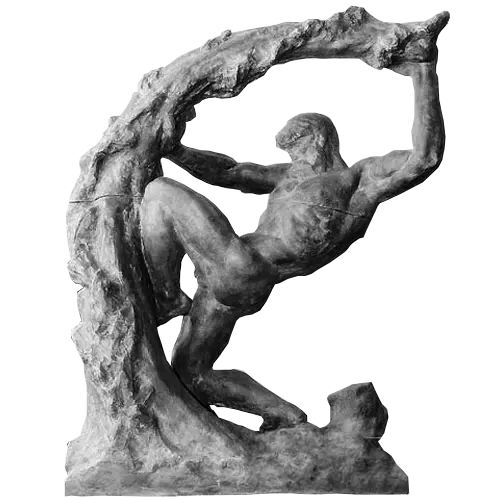
Between 2023 and 2025, the collection of the National Museum of Art of Moldova was enriched with 208 works, of which 179 belong to the National Art category. Of these, 19 works were acquired by the Ministry of Culture: 15 illustrations for the book Pară Mălăiață în gura lui Nătăfleață (1987), signed by Igor Vieru (1923–1988); three paintings—Smochine. Vîlcov (1963) by Mihai Grecu (1916–1998), and two works by Andrei Sârbu (1950–2000): Still Life with Flowers (1986) and Hermitage (1999); as well as a sculptural work, Archaeology (1996) by Tudor Cataraga (1956–2010).
Eight works that enriched the national art collection are prize-winning pieces from the Chisinau International Painting Biennale – 2023 and the Salons of Moldova; however, the majority are donations—140 works. In addition, eight icons dating from the early 19th century were transferred from the Church of the Holy Archangels Michael and Gabriel in Ciutești (Nisporeni) for restoration and subsequent inclusion in the museum’s Religious Art collection.
Among the most significant donated works are three pieces by the Romanian master Corneliu Baba (2023); nine paintings from the 1990s by Andrei Sârbu; 73 stage and costume design sketches created by the Bessarabian master Theodor Kiriakoff, dating from the early 20th century; as well as a drawing by Alexandr Bernardazzi, the only work by the renowned architect currently held in the museum’s collection.
The most substantial additions were made to the National Graphic Art collection—103 works, and to painting—54 works by masters from the Republic of Moldova and Romania.
This exhibition presents only a selection of the national art works added to the museum’s holdings over the past three years. Created in a wide variety of materials, techniques, and styles, they reflect the principal aesthetic trends in the development of modern art.
The concept of contemporary art is genetically linked to avant-garde art, yet it represents a new wave of styles, encompassing a broad range of techniques made possible by technological progress and a deeper understanding of the human condition and the world in which we live. The thematic scope is infinitely broad, ranging from portraits and landscapes to religious and abstract compositions. Overall, the exhibition demonstrates that contemporary art does not stagnate; it continues to evolve and renew itself beyond time and space. The new acquisitions presented here are living proof of this process.
Thanks to exhibitions organized in the museum’s galleries, the collections are continually renewed both with realist works, whose authors carry forward the traditions of 20th-century national art, and with entirely new examples of abstract and conceptual art. At times, by blurring the boundaries between art and reality, contemporary artists experiment with materials, techniques, and ideas, challenging past conventions through rigorous concepts of composition, space, drawing, form, and content.
Twenty-first-century art continues to move away from traditional types and forms, following a path toward new modes of artistic expression. The spirit of the age compels artists to think beyond established patterns and to embrace new ideas. It cannot be denied that current trends have had a profound impact on the artistic scene as a whole, as well as on our understanding of what art can be.
Polina Kolomeeț
Deputy Director for Collections